LAUTECH Tuition Fees 2025/2026: Complete Guide for Indigenous & Non-Indigenous Students + Admission Requirements
LAUTECH Tuition Fees 2025/2026: Indigenous students pay ₦316,700-₦550,000, non-indigenous ₦404,200-₦650,000. Get admission requirements, cut-off marks, payment methods, accommodation costs and scholarship information.
Advertisements
You have been blocked from seeing ads.
';
endif;
?>
LAUTECH Tuition Fees 2025/2026
Planning to study at Ladoke Akintola University of Technology (LAUTECH)? This comprehensive guide provides the most up-to-date information on LAUTECH school fees, admission requirements, cut-off marks, and everything you need to know for the 2025/2026 academic session.
Ladoke Akintola University of Technology (LAUTECH), located in Ogbomoso, Oyo State, was established on October 19, 1990, with an initial enrollment of 436 students. Named after the late Chief Samuel Ládòkè Akíntọ́lá, a prominent Nigerian politician and Premier of the Western Region, LAUTECH has grown to become one of Nigeria’s premier technological universities, offering quality education across multiple faculties.
Advertisements
You have been blocked from seeing ads.
';
endif;
?>
The university operates under the motto “Technology for Self-Reliance” and has consistently maintained its position as a leading institution in technological education in Nigeria. With over 30 years of academic excellence, LAUTECH has produced thousands of graduates who have made significant contributions to Nigeria’s technological and industrial development.
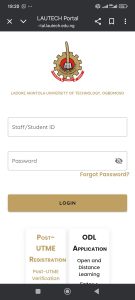
LAUTECH official portal navigations dashboard
LAUTECH Campus and Infrastructure
The main campus spans over 10,000 hectares in Ogbomoso, providing a conducive learning environment with modern facilities including:
State-of-the-art laboratories: Equipped with modern instruments for practical learning across all faculties
Digital library: Comprehensive collection of books, journals, and online resources
Computer centers: Multiple centers with high-speed internet connectivity
Research facilities: Dedicated spaces for undergraduate and postgraduate research
Medical center: On-campus health services for students and staff
Sports complex: Facilities for various sporting activities
Lecture halls: Modern amphitheaters with audio-visual equipment
Academic Excellence and Recognition
LAUTECH is accredited by the National Universities Commission (NUC) and maintains professional accreditation from various regulatory bodies including:
Council for the Regulation of Engineering in Nigeria (COREN)
Nigeria Society of Engineers (NSE)
Computer Professionals Registration Council of Nigeria (CPN)
Institute of Chartered Accountants of Nigeria (ICAN)
National Board for Technical Education (NBTE)
The university consistently ranks among the top 20 universities in Nigeria and has received recognition for its innovative research and technological contributions.
LAUTECH School Fees Structure 2025/2026 (Fresh Students)
LAUTECH School Fees Structure 2025/2026 for Indigene and Non Indigene
The university operates a dual fee structure based on “indigeneship status”, reflecting the government’s policy to make education more accessible to local students while maintaining quality standards. Here’s the complete breakdown:
Indigenous students: Oyo State indigenes pay between ₦316,700 – ₦550,000 depending on program
Non-indigenous students: Pay an additional ₦87,500 – ₦100,000 across all departments
Acceptance fee: ₦50,000 (uniform for all students)
Payment flexibility: Annual or semester payment options available
Medical programs: Higher fees due to specialized equipment and clinical training requirements
Additional Mandatory Fees
Beyond tuition, students should budget for these additional fees:
Fee Type
Amount
Description
Medical Fee
₦15,000
Annual health insurance and medical services
Student Union Fee
₦5,000
Student government and welfare services
Library Fee
₦10,000
Access to digital resources and library materials
Sports Fee
₦8,000
Sporting facilities and equipment maintenance
ICT Fee
₦12,000
Computer lab access and internet services
Development Levy
₦20,000
Infrastructure development and maintenance
Examination Fee
₦15,000
Semester and continuous assessment costs
Certificate Fee
₦25,000
Final year students only
LAUTECH Fees for Returning Students (200L-600L)
For students in 200-600 levels, LAUTECH has implemented a revised fee structure effective from the 2024/2025 academic session. This represents a significant reduction from fresh student fees, recognizing the financial commitments of continuing students:
Returning Student Fee Structure
Level
Indigenous Students
Non-Indigenous Students
200 Level
₦168,000
₦204,000
300 Level
₦168,000
₦204,000
400 Level
₦168,000
₦204,000
500 Level (where applicable)
₦168,000
₦204,000
600 Level (Medicine only)
₦200,000
₦250,000
Semester Payment Option
Students can opt to pay fees in two installments:
First Semester: 60% of total annual fee
Second Semester: 40% of total annual fee
Important Note: Students choosing semester payments must complete first semester payment before resumption and second semester payment before mid-semester to avoid academic restrictions.
LAUTECH Admission Requirements 2025/2026
General Requirements for All Applicants:
Age Requirement: Minimum age of 16 years at the time of admission
JAMB UTME Score: Minimum of 180 (though competitive scores are much higher)
O’Level Requirements:
Minimum of 5 credits in relevant subjects
Must include English Language and Mathematics
Maximum of two sittings (WAEC, NECO, NABTEB, or GCE)
Results must not be older than 5 years
Post-UTME Screening: Participation and achievement of departmental cut-off marks
Medical Fitness: Valid medical certificate from a recognized medical practitioner
Character Certificate: Certificate of good conduct from previous school
Specific O’Level Subject Requirements by Faculty:
Faculty of Agricultural Science
English Language, Mathematics, Chemistry, Biology/Agricultural Science, and one of Physics, Geography, or Economics
Faculty of Engineering Technology
English Language, Mathematics, Physics, Chemistry, and one of Further Mathematics, Biology, or Geography
Faculty of Pure and Applied Sciences
English Language, Mathematics, Physics, Chemistry, and Biology (for biological sciences)
English Language, Mathematics, Physics, Chemistry, and Further Mathematics (for physical sciences)
Faculty of Computing and Informatics Sciences
English Language, Mathematics, Physics, and two of Chemistry, Further Mathematics, Biology, or Geography
Faculty of Environmental Sciences
English Language, Mathematics, Physics, and two of Chemistry, Geography, Fine Arts, or Economics
Faculty of Arts and Social Sciences
English Language, Mathematics, and three relevant subjects depending on the specific course
College of Health Sciences
Medicine: English Language, Mathematics, Physics, Chemistry, and Biology
Nursing: English Language, Mathematics, Physics, Chemistry, and Biology
Medical Laboratory Science: English Language, Mathematics, Physics, Chemistry, and Biology
Direct Entry Requirements:
Two A’Level passes in relevant subjects with minimum grades of C
OND/HND with minimum Upper Credit (3.50 CGPA on 5.0 scale)
NCE with minimum Merit grade in relevant subjects
First degree from recognized institutions with minimum Second Class Lower Division
IJMB/JUPEB with minimum of 3 points in relevant subjects
International Student Requirements:
Educational Credentials: Foreign certificates must be evaluated by National Board for Technical Education (NBTE)
English Proficiency: TOEFL (minimum 550) or IELTS (minimum 6.0) for non-native English speakers
Student Visa: Valid study permit from Nigerian Immigration Service
Medical Certificate: International health certificate with required vaccinations
Financial Guarantee: Proof of financial capability to cover tuition and living expenses
LAUTECH Cut-Off Marks 2025/2026
JAMB Cut-Off Mark
General JAMB cut-off: 180 (minimum eligibility requirement)
However, meeting the minimum JAMB score doesn’t guarantee admission. The university considers the combined scores of JAMB and Post-UTME screening for final admission decisions.
Departmental Screening Cut-Off Marks (Based on Combined Scores)
DEPARTMENT
MERIT CUT-OFF
CATCHMENT CUT-OFF
ELDS* CUT-OFF
Medicine
79.4
73.8
70.2
Nursing
72.1
66.2
62.8
Medical Laboratory Science
69.3
65.8
61.5
Petroleum Engineering
68.7
62.4
58.9
Civil Engineering
64.0
55.7
52.1
Electrical/Electronics Engineering
63.6
54.2
50.8
Computer Science
63.1
56.0
52.3
Nutrition and Dietetics
63.4
58.1
54.6
Mechanical Engineering
62.0
47.1
44.2
Architecture
61.9
54.5
51.0
Accounting
61.1
51.2
48.7
Biochemistry
61.1
49.5
46.8
Physiology
61.7
50.0
47.2
Computer Engineering
59.9
48.0
45.1
Science Laboratory Technology
59.9
55.2
51.8
Software Engineering
59.5
52.3
49.1
English and Literary Studies
59.6
52.1
48.9
Anatomy
59.3
50.6
47.8
Surveying and Geoinformatics
58.3
52.9
49.6
Cyber Security Science
57.1
50.9
47.8
Food Science
56.9
52.0
48.7
Philosophy
55.7
49.4
46.2
Pure and Applied Biology
54.9
46.0
43.1
Economics
53.9
41.6
39.2
Agricultural Engineering
53.5
50.1
46.9
Building
53.3
46.8
43.9
Information System Science
52.8
46.4
43.5
Marketing
52.8
46.4
43.5
Estate Management
52.1
44.3
41.6
Animal Production and Health
51.8
40.2
37.8
History
51.9
40.0
37.6
Business Management
51.7
40.9
38.4
Sociology
50.1
41.6
39.0
Pure and Applied Chemistry
50.5
42.0
39.4
Urban and Regional Planning
50.0
40.0
37.6
*ELDS = Educationally Less Developed States
Cut-Off Categories:
Merit Cut-Off: For candidates competing solely on academic merit
Catchment Cut-Off: For candidates from Oyo State and neighboring states
ELDS Cut-Off: For candidates from educationally disadvantaged states
Login Credentials: Use your matriculation number as both username and password
Verify Student Information: Confirm your personal details and program information
Select Payment Option: Choose between full annual payment or semester installments
Review Fee Breakdown: Verify all mandatory fees and optional services
Choose Payment Method: Select from available options (card, bank transfer, or online banking)
Complete Transaction: Follow prompts to finalize payment
Print Receipt: Download and print payment receipt for your records
Submit to Bursary: Present receipt to university bursary for verification
Accepted Payment Methods:
Method
Details
Processing Time
Debit/Credit Card
Visa, MasterCard, Verve
Instant
Bank Transfer
All commercial banks in Nigeria
24-48 hours
Online Banking
Internet banking platforms
Instant
Mobile Money
Selected mobile payment platforms
Instant
Bank Deposit
Physical deposit at designated banks
24-48 hours
Important Payment Notes:
Only pay through official university portals or designated banks
Avoid cash payments to individuals claiming to represent the university
Acceptance fee must be paid before accessing admission letter
Document verification required before fee payment for fresh students
Keep all payment receipts until graduation
Contact university bursary immediately for payment-related issues
Payment Deadlines:
Academic Session
First Semester Deadline
Second Semester Deadline
Fresh Students
4 weeks after resumption
2 weeks after mid-session break
Returning Students
2 weeks after resumption
2 weeks after mid-session break
LAUTECH Accommodation Options and Costs
LAUTECH doesn’t operate traditional on-campus hostels, but the university community offers numerous private accommodation options within walking distance of the campus. The accommodation landscape provides various options to suit different budgets and preferences.
Private Hostel Categories and Annual Rates:
Budget-Friendly Options (Single Rooms):
Location
Room Type
Annual Rate
Features
Yoaco
Single Room
₦70,000 – ₦80,000
Basic amenities, shared facilities
Stadium
Single Room
₦55,000 – ₦75,000
Central location, varying conditions
Akowonjo
Single Room
₦60,000
Quiet environment, basic facilities
College Area
Single Room
₦90,000
Close to academic buildings
Premium Single Rooms:
Location
Room Type
Annual Rate
Features
Stadium Premium
Single Room
₦85,000 – ₦100,000
Better furnishing, improved security
Adenike
Single Room
₦85,000
Modern facilities, reliable power
Under G
Single Room
₦90,000 – ₦120,000
Popular among students, good amenities
Self-Contained Accommodations:
Location
Room Type
Annual Rate
Features
Aroje
Self-Contained
₦150,000 – ₦220,000
Private bathroom, kitchen space
Adenike
Self-Contained
₦150,000 – ₦200,000
Modern design, security
Under G (Standard)
Self-Contained
₦160,000 – ₦320,000
Varying quality levels
Under G (Full POP)
Self-Contained
₦315,000
Premium finishing, all modern amenities
Botanical Garden
Self-Contained
₦250,000 – ₦255,000
Serene environment, quality construction
Family/Shared Accommodations:
Location
Room Type
Annual Rate
Features
Aroje
Room and Parlour
₦300,000
Suitable for couples or sharing
Various Areas
2-Bedroom Flat
₦320,000 – ₦600,000
Family accommodation, multiple occupancy
Various Areas
3-Bedroom Flat
₦230,000 – ₦520,000
Large families, group sharing
Accommodation Selection Tips:
Visit Before Committing: Physically inspect accommodation before making payments
Consider Location: Proximity to campus, markets, and transportation
Verify Amenities: Confirm electricity, water supply, and internet availability
Security Assessment: Evaluate neighborhood safety and hostel security measures
Cost Analysis: Include utility costs, transportation, and maintenance fees
Lease Agreement: Read and understand all terms before signing
References: Seek recommendations from current or former occupants
Essential Amenities to Confirm:
Reliable electricity supply (generator backup)
Water availability (borehole or regular supply)
Security measures (gates, security personnel)
Internet connectivity
Proximity to commercial areas
Transportation accessibility
Waste management systems
Fire safety measures
Student Life at LAUTECH
Academic Calendar Structure:
LAUTECH operates on a semester system with two main academic sessions:
First Semester: September – December Second Semester: January – June
The academic year includes:
Orientation week for fresh students
15 weeks of lectures per semester
2 weeks of examinations
Mid-semester break (1 week)
Long vacation (July – August)
Student Support Services:
Academic Support:
Student Affairs Office: General academic guidance and counseling
Tutorial Services: Additional support for challenging subjects
Research Supervision: Guidance for final year projects and research
Career Counseling: Professional development and career planning
Student Welfare Services:
Health Services: On-campus medical center with qualified personnel
Counseling Center: Professional psychological and emotional support
Financial Aid Office: Scholarship and bursary information
International Student Office: Support for foreign students
Disability Support: Assistance for students with special needs
Extracurricular Activities:
Student Organizations:
Student Union Government (SUG)
Faculty-based associations
Professional societies (NSE, NCS, etc.)
Religious organizations
Cultural and ethnic associations
Sports clubs and teams
Annual Events:
LAUTECH Week (cultural and academic festival)
Inter-faculty competitions
Career fairs and job exhibitions
Alumni homecoming
Sports festival
Academic conferences and seminars
Transportation and Mobility:
Campus Transportation:
Campus Shuttle: Limited internal transportation
Commercial Motorcycles: Popular for short distances
Tricycles (Keke): Affordable option for campus movement
Private Cars: Limited parking available
Off-Campus Transportation:
Bus Terminals: Regular services to major Nigerian cities
Airport Access: Ilorin Airport (90 minutes) is the nearest
Interstate Travel: Multiple transport companies serve Ogbomoso
Financial Planning and Budgeting for LAUTECH Students
Comprehensive Annual Budget Estimation:
Tuition and Mandatory Fees:
Category
Indigenous Students
Non-Indigenous Students
Tuition (Fresh)
₦316,700 – ₦550,000
₦404,200 – ₦650,000
Additional Fees
₦110,000
₦110,000
Total Academic Costs
₦426,700 – ₦660,000
₦514,200 – ₦760,000
Living Expenses (Annual):
Expense Category
Budget Range
Details
Accommodation
₦70,000 – ₦320,000
Varies by location and type
Feeding
₦200,000 – ₦400,000
₦550 – ₦1,100 daily
Textbooks/Materials
₦50,000 – ₦100,000
Course materials and supplies
Transportation
₦30,000 – ₦80,000
Local and occasional travel
Personal Items
₦40,000 – ₦80,000
Clothing, toiletries, etc.
Internet/Communication
₦25,000 – ₦40,000
Data, calls, subscription services
Medical/Emergency
₦20,000 – ₦50,000
Healthcare beyond campus services
Recreation/Social
₦30,000 – ₦60,000
Entertainment and social activities
Total Living Costs
₦465,000 – ₦1,130,000
Depends on lifestyle choices
Overall Annual Budget:
Indigenous Students: ₦891,700 – ₦1,790,000
Non-Indigenous Students: ₦979,200 – ₦1,890,000
Money-Saving Tips for Students:
Academic Cost Reduction:
Share Textbooks: Form study groups to share book costs
Digital Resources: Utilize free online resources and university library
Second-Hand Materials: Purchase used textbooks from senior students
Scholarship Applications: Actively seek and apply for available scholarships
Payment Plans: Use semester payment options to manage cash flow
Living Cost Management:
Shared Accommodation: Room with trusted friends to split costs
Cook at Home: Prepare meals instead of buying food regularly
Budget Shopping: Buy items in bulk and shop at local markets
Transportation Planning: Walk when possible, use shared transport
Entertainment Budgeting: Take advantage of free campus events
Available Financial Aid Options:
Merit-Based Scholarships:
Vice-Chancellor’s Excellence Award: Full tuition for top performers
Faculty Merit Awards: Partial tuition based on academic performance
Professional Body Scholarships: From engineering and other professional organizations
Need-Based Assistance:
Oyo State Bursary: For indigent Oyo State students
Federal Government Bursary: National scholarship programs
Private Foundation Grants: Various NGOs and corporate foundations
Work-Study Opportunities:
Teaching Assistantships: For postgraduate students
Research Assistantships: Work with faculty on research projects
Administrative Support: Part-time positions in university offices
Private Tutoring: Teaching other students in various subjects
Tips for Prospective LAUTECH Students
Academic Preparation Strategies:
For JAMB Preparation:
Subject Mastery: Focus intensively on your chosen JAMB subjects
Past Questions Practice: Solve at least 10 years of past questions
Time Management: Practice answering questions within time limits
Mock Examinations: Take multiple practice tests to build confidence
Subject Combination Verification: Ensure your subjects match departmental requirements
For Post-UTME Preparation:
Departmental Focus: Study specific requirements for your chosen course
Current Affairs: Stay updated on national and international developments
Practical Skills: Prepare for practical sessions in science and technology courses
Interview Preparation: Practice answering common interview questions
Document Organization: Have all required documents properly arranged
Strategic Application Approach:
Course Selection Strategy:
Primary Choice: Select your most preferred course as first choice
Backup Options: Choose related courses with lower cut-offs as alternatives
Multiple Applications: Apply to several universities simultaneously
Course Research: Understand career prospects and industry demand
Personal Assessment: Match course requirements with your strengths
Timing and Deadlines:
Early Application: Submit applications as soon as portals open
Deadline Tracking: Create a calendar of important dates
Document Preparation: Have all required documents ready in advance
Fee Payment Timing: Pay fees promptly to avoid last-minute issues
Follow-Up: Regularly check application status and communications
Financial Preparation:
Pre-Admission Financial Planning:
Cost Estimation: Calculate total costs including hidden expenses
Savings Plan: Start saving early for education expenses
Income Sources: Identify potential funding sources
Emergency Fund: Maintain funds for unexpected expenses
Scholarship Applications: Apply for scholarships before admission
Documentation for Financial Aid:
Family income statements
Local government identification
Bank statements
Academic transcripts
Letters of recommendation
Personal statements or essays
LAUTECH Alumni Success Stories and Career Outcomes
Notable Alumni Achievements:
LAUTECH has produced distinguished graduates who have made significant contributions across various sectors:
Engineering and Technology:
Telecommunications Industry: Many alumni hold leadership positions in MTN, Airtel, Glo, and emerging tech companies
Construction Sector: LAUTECH civil engineers lead major infrastructure projects across Nigeria
Manufacturing: Graduates occupy key positions in Dangote Group, Lafarge, and other industrial giants
Oil and Gas: Alumni work with Shell, Chevron, Total, and indigenous oil companies
Healthcare and Life Sciences:
Medical Practice: LAUTECH-trained doctors practice in leading hospitals across Nigeria and abroad
Research: Alumni contribute to medical research in universities and research institutions
Public Health: Graduates serve in WHO, UNICEF, and national health agencies
Pharmaceutical Industry: Many work with major drug manufacturers and regulatory agencies
Academia and Research:
University Leadership: Several alumni serve as vice-chancellors and senior academics
International Recognition: LAUTECH graduates receive international research grants and recognition
Innovation: Alumni lead research in renewable energy, biotechnology, and information systems
Publications: Graduates contribute significantly to academic literature and patents
Career Services and Industry Connections:
Career Development Center:
Skills Assessment: Helping students identify strengths and career paths
Resume Building: Professional guidance on CV and application writing
Interview Preparation: Mock interviews and presentation skills training
Industry Networking: Connections with potential employers and mentors
Entrepreneurship Support: Training and guidance for student startups
Industry Partnerships:
Internship Programs: Arrangements with leading companies for student placements
Graduate Recruitment: Direct recruitment drives by partner companies
Project Collaboration: Industry-sponsored research and development projects
Professional Mentoring: Alumni and industry professionals guide current students
Employment Statistics:
Recent data shows impressive employment outcomes for LAUTECH graduates:
Graduate Employment Rate: 85% within 18 months of graduation
Industry Placement: 60% in private sector, 25% in public sector, 15% entrepreneurship
Salary Ranges:
Fresh graduates: ₦150,000 – ₦400,000 monthly
5+ years experience: ₦500,000 – ₦2,000,000 monthly
Senior management: ₦1,500,000+ monthly
International Opportunities: 20% of graduates pursue further studies or work abroad
Frequently Asked Questions (FAQs)
1. How much is LAUTECH school fees for fresh students in 2025/2026?
LAUTECH school fees for fresh students range from ₦316,700 to ₦650,000 depending on your faculty and indigeneship status. Indigenous students pay between ₦316,700 – ₦550,000, while non-indigenous students pay ₦404,200 – ₦650,000. Additionally, all students must pay a ₦50,000 acceptance fee plus mandatory fees totaling approximately ₦110,000.
2. Can I pay LAUTECH school fees in installments?
Yes, LAUTECH allows both annual and semester payment options. You can choose the payment plan that best suits your financial situation. For semester payments, 60% is due in the first semester and 40% in the second semester. However, ensure you complete payments before each semester’s deadline to avoid academic disruptions.
3. What is the difference between merit and catchment cut-off marks?
Merit cut-off marks apply to all candidates competing for admission based solely on academic performance. Catchment cut-off marks are lower thresholds for candidates from Oyo State and neighboring states within the university’s catchment area. ELDS (Educationally Less Developed States) cut-offs are even lower for candidates from educationally disadvantaged states. All categories require meeting the minimum JAMB score of 180.
4. Is document verification required before paying school fees?
Yes, fresh students must complete document verification before paying school fees. This process validates your O’Level certificates, JAMB registration, birth certificate, and other credentials. Only after successful verification can you proceed with fee payment through the official portal. This prevents admission complications and ensures proper record keeping.
5. Are there any hidden charges beyond the stated tuition fees?
The stated fees are comprehensive, but students should budget for additional expenses like practical fees for laboratory-based courses (₦10,000-₦25,000), field trip costs (₦5,000-₦15,000), professional body registration fees (₦5,000-₦20,000), and departmental association dues (₦2,000-₦5,000). These vary by program and are announced as needed.
6. How do I confirm my indigeneship status for fee calculation?
Oyo State indigenes must provide a valid Certificate of Origin from their Local Government Area or State of Origin certificate during document verification. These must be recent (not older than 6 months) and properly endorsed. Non-Oyo State residents automatically fall under the non-indigenous category regardless of their state of origin.
7. What accommodation options are available near LAUTECH?
LAUTECH doesn’t have official hostels, but numerous private accommodations surround the campus. Options range from ₦55,000 annually for basic single rooms to ₦320,000 for premium self-contained apartments. Popular areas include Under G, Aroje, Adenike, Stadium, and Botanical Garden. We recommend visiting multiple options before making decisions.
8. How competitive is admission to LAUTECH?
LAUTECH is highly competitive, especially for courses like Medicine (79.4% cut-off), Engineering, and Computer Science. With over 40,000 applications for approximately 8,000 spaces annually, the acceptance rate is about 20%. Success requires scoring significantly above minimum requirements and excellent performance in Post-UTME screening.
9. What scholarship opportunities are available?
LAUTECH offers various scholarship opportunities including the Vice-Chancellor’s Excellence Award (full tuition), faculty merit awards (partial tuition), Oyo State bursary for indigenes, federal government scholarships, and private foundation grants. Students should maintain good academic standing and actively apply for available opportunities.
10. Can international students apply to LAUTECH?
Yes, international students are welcome at LAUTECH. They must meet educational equivalency requirements, provide English proficiency certification (TOEFL/IELTS), obtain student visas, and pay international student fees (typically 20-30% higher than domestic rates). The International Student Office provides comprehensive support for foreign students.
11. What is the university’s academic calendar?
LAUTECH operates a two-semester system. The first semester runs from September to December, while the second semester is from January to June. Each semester includes 15 weeks of lectures, 2 weeks of examinations, and a one-week mid-semester break. The long vacation spans July and August.
12. How does the Post-UTME screening work?
The Post-UTME screening typically consists of a computer-based test covering subjects relevant to your chosen course. Some departments may include practical sessions or oral interviews. The screening usually occurs 2-4 weeks after JAMB results are released. Candidates must achieve departmental cut-off marks for admission consideration.
13. What support services are available for students?
LAUTECH provides comprehensive student support including academic advising, counseling services, career guidance, health services, disability support, and financial aid counseling. The Student Affairs Division coordinates these services to ensure student success and well-being throughout their academic journey.
14. Can I change my course after admission?
Course changes are possible but limited and subject to availability in the desired program. Students must meet the new course’s admission requirements, including O’Level subject requirements and cut-off marks. Applications for course changes are typically considered during the first semester of the fresh year.
15. What are the job prospects for LAUTECH graduates?
LAUTECH graduates enjoy excellent job prospects with an 85% employment rate within 18 months of graduation. The university’s strong industry connections, practical-oriented curriculum, and reputation ensure graduates are well-prepared for the job market. Many alumni occupy leadership positions in major Nigerian and international companies.
Recent Updates and Changes for 2025/2026 Session
New Academic Programs:
LAUTECH has introduced several new programs to meet evolving industry needs:
Artificial Intelligence and Machine Learning (Faculty of Computing)
Renewable Energy Engineering (Faculty of Engineering Technology)
Digital Marketing and E-Commerce (Faculty of Arts and Social Sciences)
Public Health (College of Health Sciences)
Data Science and Analytics (Faculty of Computing and Informatics Sciences)
Infrastructure Developments:
The university continues expanding its facilities:
New Central Library: State-of-the-art 5-story library with 2,000 seating capacity
Engineering Complex: Modern laboratories for all engineering departments
ICT Center: Upgraded computer labs with latest technology
Sports Facilities: New multipurpose sports complex and gymnasium
Power Infrastructure: Improved electricity supply with solar power integration
Technology Integration:
LAUTECH has embraced digital transformation:
Online Learning Platform: Comprehensive e-learning system for all courses
Digital Library: Access to international journals and research databases
Student Portal: Integrated system for registration, fee payment, and academic records
Mobile App: Official university app for student services and communication
Wi-Fi Expansion: Campus-wide internet connectivity for students and staff
Partnerships and Collaborations:
Recent partnerships enhance educational quality:
Industry Partnerships: Expanded collaborations with Microsoft, Google, IBM, and local tech companies
International Linkages: Exchange programs with universities in UK, USA, Canada, and South Africa
Research Collaborations: Joint research projects with international institutions
Professional Bodies: Strengthened relationships with professional regulatory bodies
Conclusion
LAUTECH represents an excellent choice for quality technological education in Nigeria, combining academic excellence with affordability. The university’s comprehensive fee structure accommodates both indigenous and non-indigenous students while maintaining high educational standards.
Success in gaining admission requires careful preparation, meeting all requirements, and achieving competitive scores in both JAMB and Post-UTME screenings. The investment in LAUTECH education pays dividends through excellent career prospects, strong alumni networks, and comprehensive skill development.
Key Takeaways for Prospective Students:
Academic Preparation: Aim significantly above minimum requirements for competitive advantage
Financial Planning: Budget comprehensively including tuition, accommodation, and living expenses
Early Application: Submit applications and required documents promptly
Multiple Options: Apply to several institutions to maximize admission chances
Stay Informed: Regularly check official university communications for updates
Personal Recommendations
As an ex student of the campus, I will advise you to:
Visit the Campus: Experience the environment firsthand before making final decisions
Connect with Current Students: Get insider perspectives on university life
Explore All Options: Consider all available programs and their career prospects
Plan Financially: Develop comprehensive funding strategies including scholarships
Maintain Excellence: Focus on academic performance throughout your journey
For the most current and detailed information, always consult official LAUTECH communications through:
Don’t forget that Success or failures at LAUTECH begins at the very first day you step your legs at Lautech gate after gaining admission for your program. Thus, proper preparation, planning and dedication to academic excellence usually lead to rewarding grades and career opportunities in the future.
Hi guys!
Meet Deborah Hiny, a passionate blogger and biochemist with a flair for all things science and education. With a love for learning and exploring, she's always on the lookout for the latest educational updates and trends. When she's not blogging, you can find her planning her next adventure or traveling to new destinations. As the founder of EduPunch, Deborah shares her enthusiasm for education and science with readers, inspiring and informing them along the way.






5 Comments